Home / Buyer Journal / QUALITY CONTROL
QUALITY CONTROL / WLACC BUYER JOURNALHair Accessory Quality Control Checklist for Wholesale Headbands
A practical wholesale headband QC checklist for sample comparison, fabric and trim inspection, sizing, labeling, packaging and shipment release.
WLACC Buyer Journal · Published 26 October 2026 · Practical sourcing guidance, not a supplier quotation
Start with an approved sample and a written specification
Quality control works best when the buyer and supplier agree what is acceptable before production starts. A photograph does not define comfort, grip, component attachment or pack-out quality. Use an approved physical sample, its revision, the SKU and agreed tolerances to guide inspection. Without those, two people can inspect the same headband and reach different conclusions.
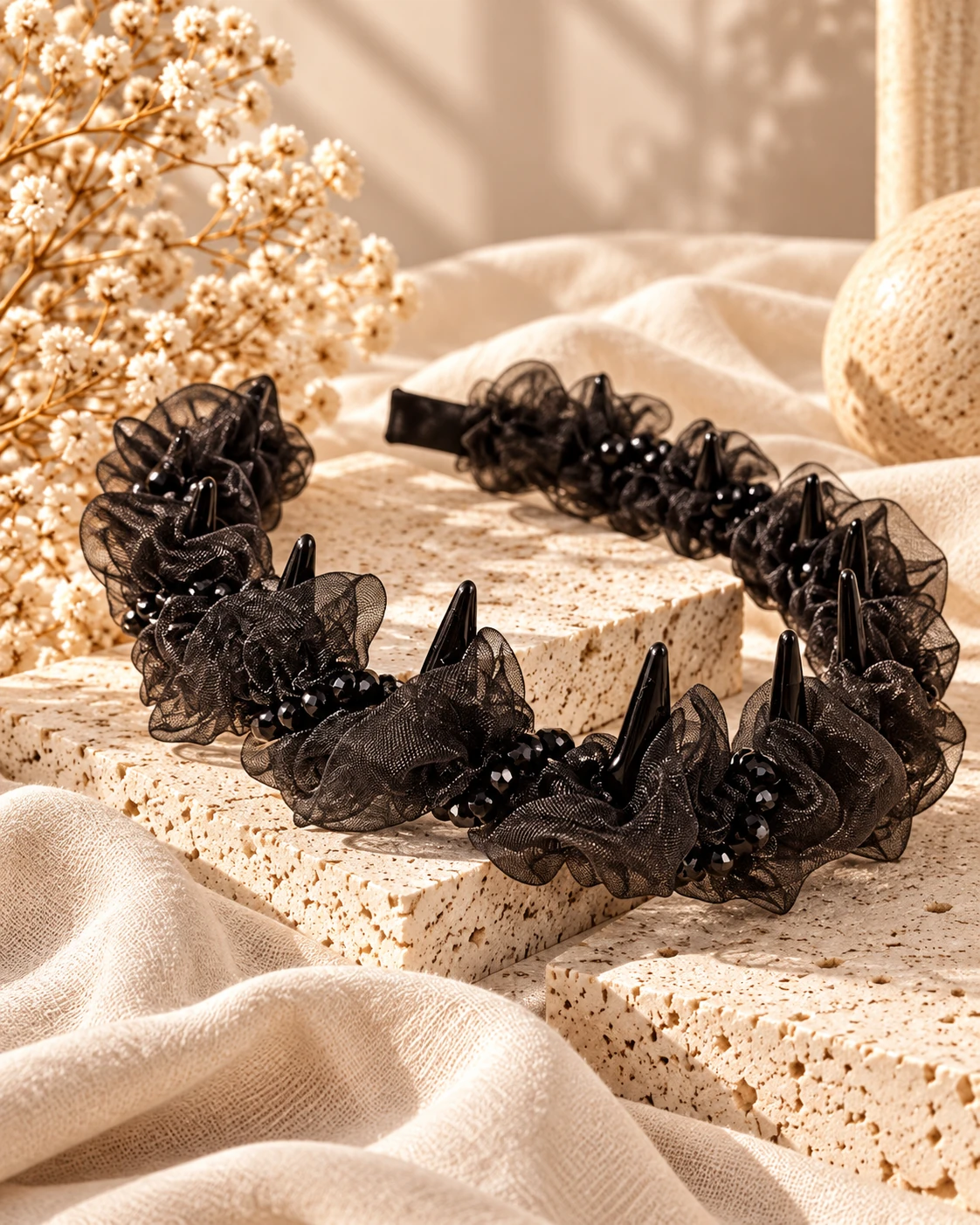
Our WL-001 fabric headband, WL-024 open-weave style and WL-037 decorated style illustrate why different constructions need different checkpoints. Their catalog images are reference photographs, not factory inspection certificates.
Check appearance and construction
- Fabric or mesh surface: compare shade to approved reference, check wrinkles, loose threads, stains, snags, uneven weave and visible adhesive.
- Shape and comfort: compare dimensions and arch shape to the approved sample, check edge finishing and how the headband grips without obvious damage.
- Teeth, padding and ends: inspect alignment, sharp edges, end caps, structural joins and any loose inserts.
- Decorative elements: verify type, placement and attachment of stones, beads, buttons and trims against the approved specification. For WL-037 the decorative stones are described as acrylic; do not extrapolate this to every SKU.
- Symmetry and consistency: compare a reasonable spread across colors and units, not just the most attractive sample.
Check packaging and retail identification
Confirm that the packed unit, label text, barcode, style code, color reference and quantities match the written order. Inspect whether headbands are protected against pressure and friction. A well-made product can still become unsaleable when its label is incorrect or delicate trim is crushed in transit. The packaging guide covers the decisions to approve earlier in the process.
Separate material claims from visible inspection
A visual check can identify obvious defects, but it cannot prove fiber composition, chemical compliance or a material certificate. If your destination market or retail policy requires specific tests, establish which laboratory evidence is needed and who is responsible for supplying it before production. Do not treat the words “satin”, “linen-look” or “crystal” as complete composition declarations. See the materials guide.
Agree how defects are recorded and resolved
Define inspection timing, sample selection, acceptable tolerances, which defects are critical to your customer, and who approves rework or replacement. Include photos, SKU, color, sampled quantity and production lot/revision in records. There is no universal pass rate that makes every product safe or compliant; use the agreed buyer standard and relevant requirements.
Buyer questions
Is a supplier's product photo enough to approve a bulk shipment?
No. Photos can document appearance, but an agreed sample and inspection record are needed when grip, sizing, attachments, labeling and packing are part of the purchasing contract.
Can a visual QC check certify a fiber or chemical claim?
No. Testing and documentation may be necessary depending on the claim and destination market. State the required evidence before ordering so it can be priced and verified.
Next: Combine this inspection plan with the wholesale buying checklist and send your sourcing requirements.